
(updated September 4th, 2026)
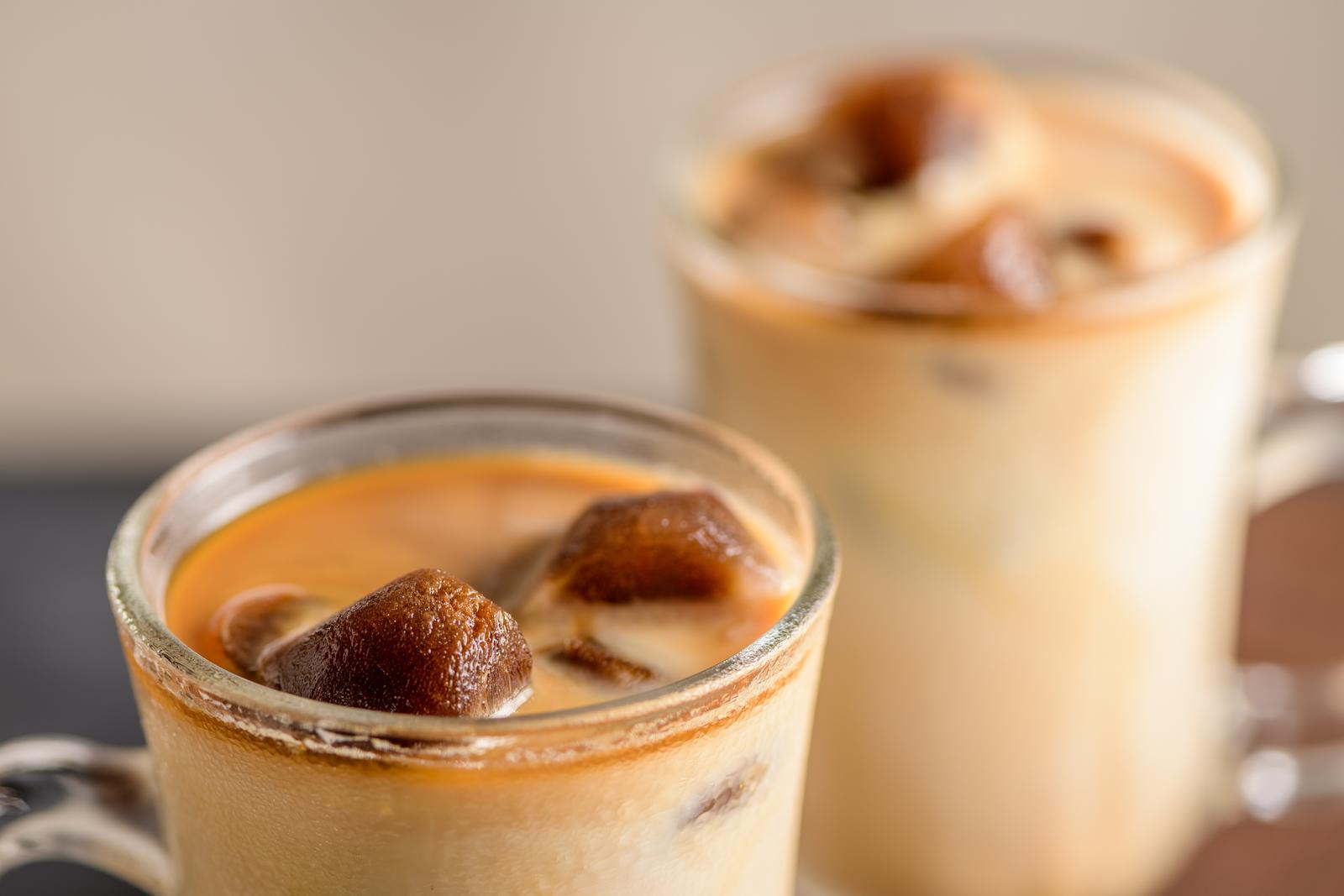
An iced cappuccino is espresso and cold milk over ice, topped with cold foam: milk aerated without heat. The thing worth knowing before you order one is that there’s no agreed definition of it. The hot version has a certified spec and the iced version doesn’t, which is why no two cafés make it the same way.
What’s actually in an iced cappuccino?
Three things, and a fourth that’s optional:
- Espresso. The same shot as a hot cappuccino, either cooled or pulled straight over ice.
- Cold milk. Not steamed, not heated, poured over the ice.
- Cold foam. Milk aerated without steam, spooned or poured on top.
- Sweetener, sometimes, and more often than not in a chain.
Two things it is not. It isn’t blended: a drink whipped up in a blender with ice is a frappé, which is a different thing entirely. And it isn’t made with drip coffee, filter coffee or instant. The coffee underneath is espresso, same as the hot one.
Is an iced cappuccino a real cappuccino?
Strictly, no, and the reason is more interesting than the answer. A hot cappuccino has an actual specification: the Istituto Espresso Italiano certifies it as 25 ml of espresso and 100 ml of steamed milk. Steamed is the operative word. Heat is what unfolds the milk proteins so they can hold a foam, so you can’t produce that texture without it, and it’s why a cappuccino is a hot drink by default.
Nobody certifies an iced cappuccino. There’s no governing body, no ratio, no required volume. It’s a category defined by what cafés happen to serve, which is exactly why yours varies so much depending on where you buy it. That isn’t a reason to avoid it. It’s a reason to expect variation instead of being annoyed by it.
It is also newer than most people assume. Cold foam only spread through the big chains from around 2014 onwards, so the iced cappuccino you meet today is roughly a decade old, against a hot cappuccino that goes back to the espresso machines of the early twentieth century. The hot one had a century to settle into a definition. The cold one hasn’t had the time.
It’s also worth separating from the freddo cappuccino, which is a specific Greek drink: iced espresso under a cap of cold-whipped foam called afrógala. The two get used interchangeably and they shouldn’t be. The freddo has a technique and a tradition behind it.
What’s the difference between an iced cappuccino and an iced latte?
The foam, and only the foam. Both are espresso and cold milk over ice. An iced cappuccino has a distinct layer of cold foam sitting on top; an iced latte is milk the whole way down.
That matters less when cold than it does when hot. In the hot versions the foam is a real structural difference: a cappuccino wants at least a centimeter of microfoam against a latte’s half centimeter. Iced, the gap narrows to a topping, which is why a weak iced cappuccino and an iced latte can be difficult to tell apart. If the foam on yours is thin, you’ve essentially been sold the other drink.
What does an iced cappuccino taste like?
Cleaner and sharper than the hot version, and less rounded. Chilling mutes the aromatics, so you get less of the smell that normally does half the work, and what’s left reads as more directly coffee-flavored.
The texture is the bigger change. Cold foam is coarser than steamed microfoam, and that’s physics rather than sloppiness. Thomas Huppertz, a milk researcher at Wageningen University, told Sprudge that foam begins destabilising the moment it’s made, and “that destabilization is typically higher in milk foamed at lower temperature.” Bigger bubbles, a foam that sits rather than folds in.
It shouldn’t taste chocolatey, incidentally, unless someone has put chocolate in it. Cocoa is a topping some places add, not a flavor the drink has on its own.
How do you make an iced cappuccino at home?
- Pull a shot of espresso. Either let it cool for a minute or pull it straight over ice so it chills fast.
- Aerate cold milk without heating it. A handheld frother works, so does a French press plunged up and down, or a jar shaken hard.
- Fill a glass with ice and pour the espresso over it.
- Add a splash of cold milk, then spoon the foam on top.
Skimmed milk gives the thickest and most stable cold foam, because foam is built by protein and destabilised by fat. Whole milk tastes better and holds less well. That’s the same trade-off the Italian spec makes for the hot version, where whole milk is specified for flavor despite being harder to texture.
What will you get if you order one out?
It depends entirely on where you are, which follows from there being no standard. A specialty café will usually build it properly: espresso, cold milk, cold foam. A chain is more likely to hand you something sweetened by default, and some sell a blended version under the same name.
So it’s worth one question at the counter: is it foamed or blended? If it’s blended, you’re ordering a frappé and it’ll be considerably sweeter than you expect. I’d ask for it unsweetened either way and add sugar myself if it needs it, because a syrup you didn’t ask for is very hard to take back out.