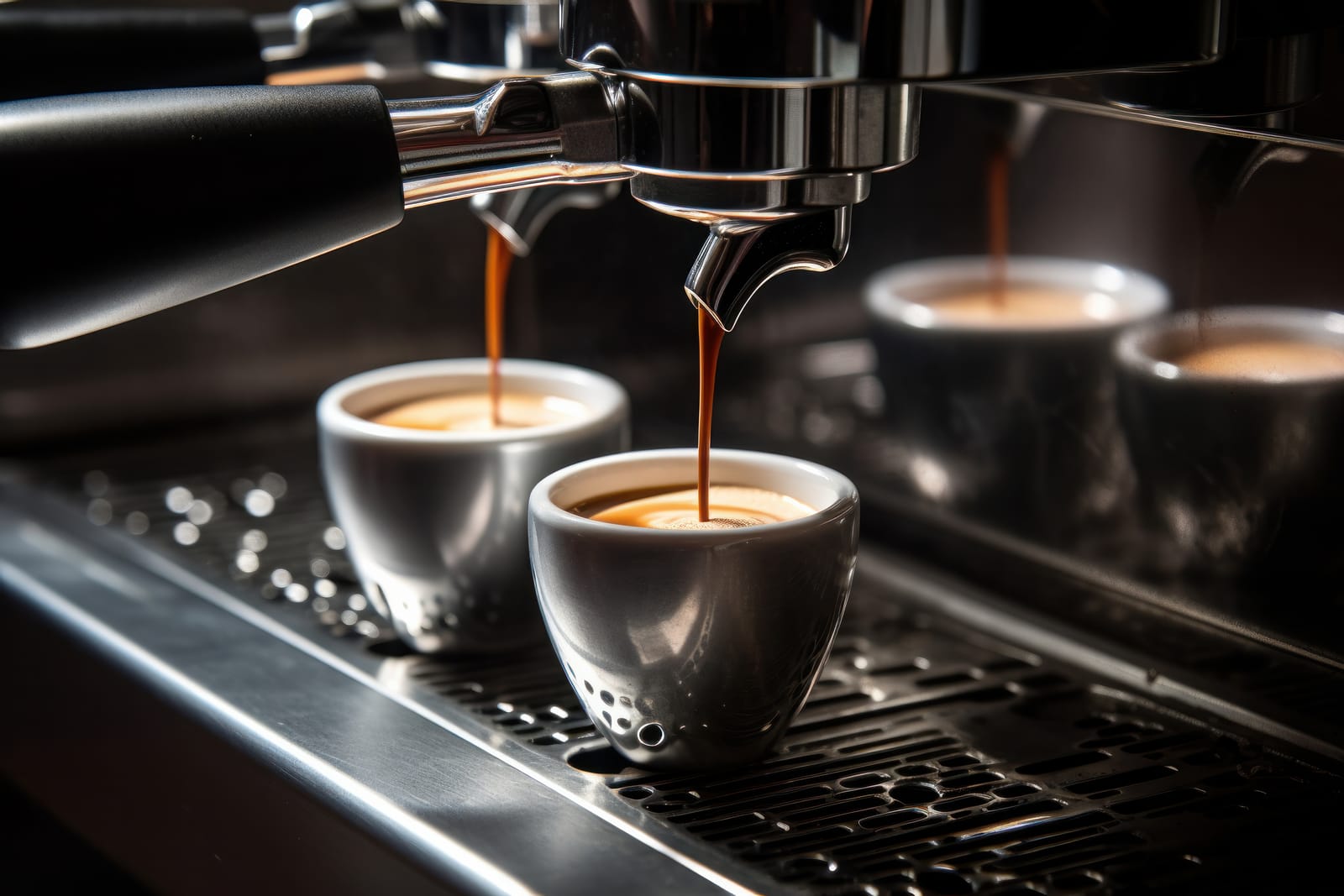

Breville espresso machines target home users who want pro-level results without the hassle of commercial gear. You’ll find a range of models, from semi-automatics that put you in control to super-automatics that grind and brew with a single button. Breville has something for most budgets and skill levels.
When choosing a Breville espresso machine, think about how much control you want, whether you need built-in features like a grinder or milk frother, and how much space you can spare. Semi-automatic models give you more hands-on involvement and control, while automatics are easier but less customizable. Size matters, too: both the water tank and bean hopper affect how often you’ll be refilling. We spent time with several Breville machines to see which ones actually deliver quality espresso and fit different needs.
Best Breville Espresso Machines
Here’s our short list of Breville espresso machines. We tested and reviewed each model to help you figure out which one suits your home setup.
Breville Barista Express
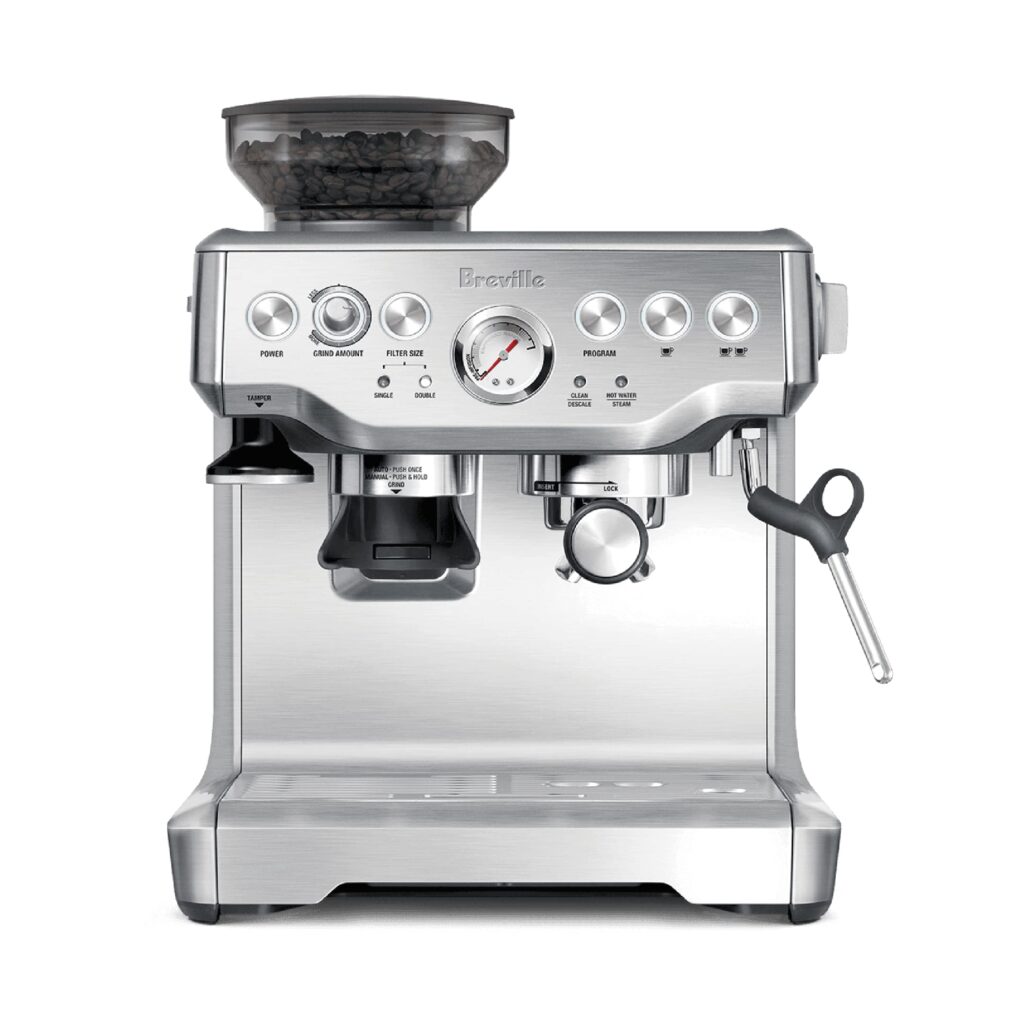
This machine makes cafe-quality espresso at home and pays for itself fast if you’re a regular coffee drinker.
Pros
- Built-in grinder lets you go from whole beans to espresso in about a minute
- Strong steam wand creates the microfoam you need for latte art
- Controls are easy to learn even if you’ve never made espresso before
Cons
- Takes some practice to dial in the right grind size and pressure
- The single and double shot buttons may need manual override for best results
- Weighs over 22 pounds and takes up considerable counter space
We pulled our first shot within minutes of unboxing this machine. The grinder saves counter space and keeps beans fresh since you only grind what you need. The grind size dial makes it easy to adjust for different beans.
The temperature stays consistent shot after shot, which helps with extraction. The low pressure pre-infusion brings out flavor without making espresso bitter. The digital controls help you get the water temperature right each time.
Steaming milk with the wand gives you control over texture. We got decent microfoam after a few tries. The included milk jug works well for one or two drinks.
Cleaning takes a few minutes each day and the included tools help. The water tank holds enough for several drinks before you need to refill. The drip tray has an indicator that pops up when it’s full, which is handy.
The stainless steel body looks professional and feels sturdy. The portafilter and tamper both feel solid. This machine gives you space to improve your technique as you figure out what tastes best to you.
Breville Barista Touch
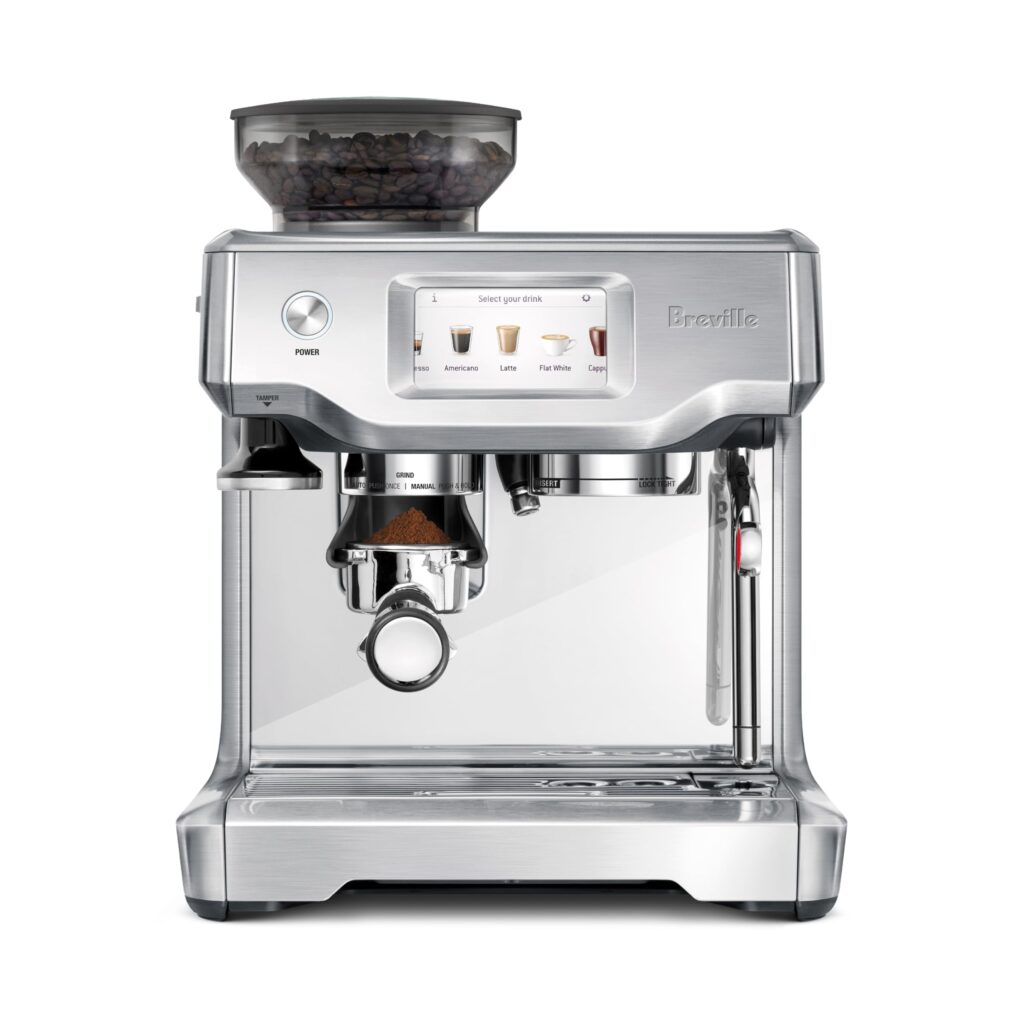
This machine makes excellent espresso drinks at home with minimal effort, making it a good pick if you want quality without a steep learning curve.
Pros
- The touchscreen makes creating customized drinks simple and you can save up to 8 personal favorites
- Built-in grinder produces fresh grounds right before brewing for better flavor
- Auto steam wand textures milk consistently without requiring manual technique
Cons
- The start button can become unresponsive after several months of use
- Customer support is limited and you may need to troubleshoot issues on your own
- Price point is high compared to other home espresso options
We found the Breville Barista Touch takes the guesswork out of making coffee drinks. The touchscreen walks you through each step in a clear way. We picked our drink, and the machine handled grinding, brewing, and milk frothing.
The espresso we pulled matched what we get at coffee shops. The integrated grinder gives you fresh grounds every time, which makes a noticeable difference in taste. The ThermoJet heating system gets ready in a few seconds, so you’re not stuck waiting.
Creating microfoam for lattes became straightforward with the automatic steam wand. We adjusted the temperature and texture settings until we found what worked, then saved those preferences. The machine remembered our settings for next time.
The build feels solid for daily use. The stainless steel construction looks good on the counter and seems durable. The included accessories like the steel milk jug and portafilter are well made.
We did run into an issue where the start button stopped responding after a few months. When this happened, we had to power cycle the machine. Getting help from customer support was a challenge, so we turned to online forums for fixes.
The Breville Barista Touch takes up a fair amount of counter space, with its 15.5 inch width and 16 inch height. The water tank holds enough for several drinks before a refill. Cleaning needs regular attention, but the included cleaning kit helps.
Breville Bambino
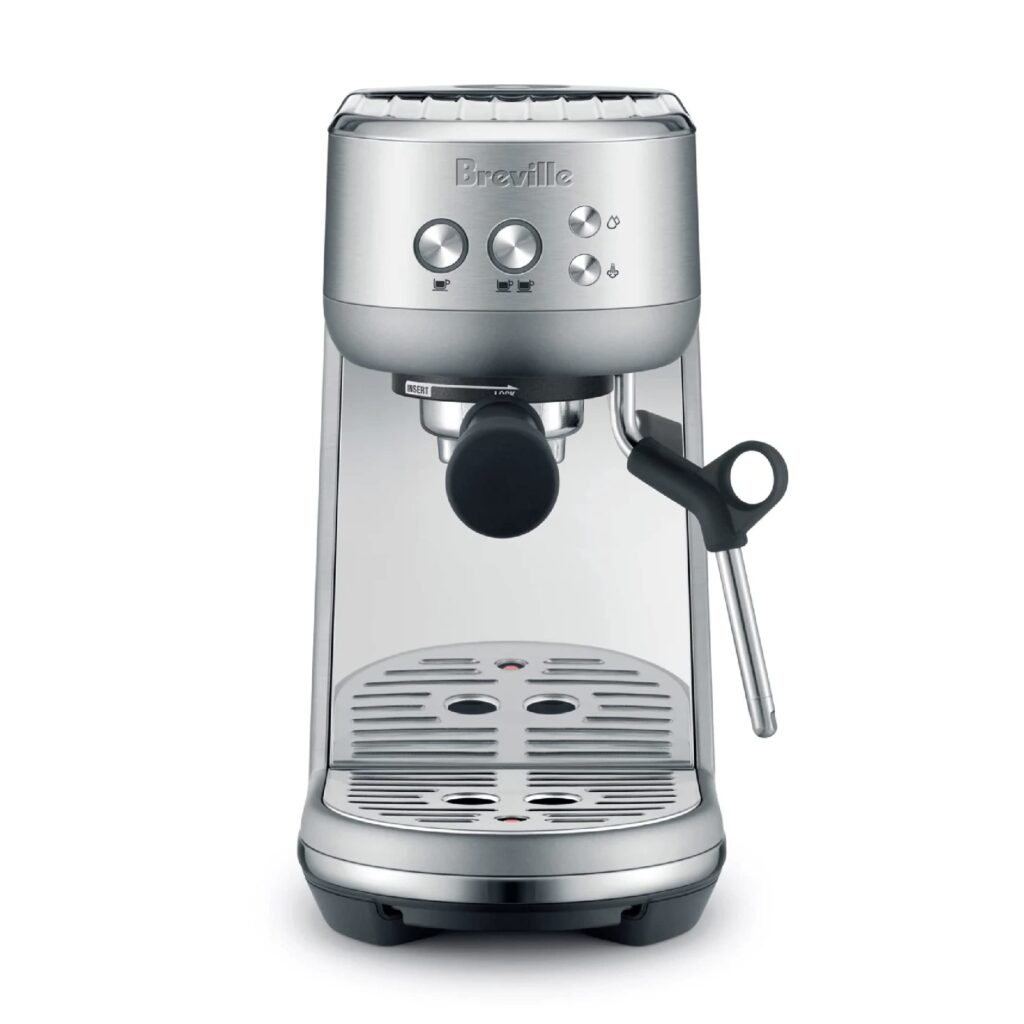
The Breville Bambino brings impressive espresso quality in a compact package, which is perfect for anyone after café-style drinks without giving up half their counter.
Pros
- Heats up in 3 seconds, so you can pull shots almost immediately
- The automatic steam wand creates silky microfoam with minimal effort, great for latte art
- Small footprint saves counter space while still using a proper 54mm portafilter
Cons
- Build quality feels lighter than expected for the price
- Limited manual control options compared to more advanced Breville models
- The 47-ounce water tank needs frequent refills if you’re making a lot of drinks
We’ve pulled plenty of shots with the Breville Bambino, and the speed is no joke. That 3-second heat-up time actually delivers. Hit the button and it’s ready to go almost instantly.
The automatic steam wand took some trial and error. We played with the temperature and texture settings to get our milk right. Once we figured it out, though, the microfoam came out smooth and velvety every time.
Extraction quality impressed us from the start. The PID temperature control keeps things consistent, and the low-pressure pre-infusion helps pull even flavor from the grounds. The machine feels lighter than other models, but it hasn’t affected performance so far.
Counter space is always at a premium in our kitchen, and this machine solves that problem. It fits in tight spots but still uses the 54mm portafilter we wanted for proper espresso. The brushed stainless steel looks clean and professional without being over the top.
Buying Guide
When shopping for an espresso machine, think about your skill level first. Beginners should look for machines with automatic features and simple controls. If you’ve got some experience, you might want manual options that give you full control over each shot.
Budget Considerations
Your budget sets the stage for what you can get. Entry-level machines cost less but don’t have as many features. Mid-range options offer better build quality and more control. High-end machines deliver pro-level performance and durability.
Key Features to Evaluate
Check the boiler type before you buy. Single boilers make you wait between brewing and steaming. Dual boilers let you do both at once, which saves time.
Pump pressure impacts extraction quality. You’ll want at least 9 bars of pressure for proper espresso. Lower pressure won’t extract coffee the way it should.
| Feature | What to Look For |
|---|---|
| Portafilter Size | 54mm or 58mm for better results |
| Water Tank | Larger capacity means less refilling |
| Steam Wand | 360-degree rotation offers flexibility |
| Grinder | Built-in saves counter space |
| Temperature Control | PID control maintains consistency |
Size and Storage
It’s smart to measure your counter space before you buy. Some machines stand pretty tall and might not fit under your cabinets. Look at the dimensions and make sure you’ve got enough space to attach and remove the portafilter without a struggle.
Weight says a lot about build quality. When a machine feels heavier, it probably uses more metal parts, which tend to last longer than plastic.