
(updated November 5th, 2026)
Drink it soon after it’s served, in small sips, and don’t stir it first. That’s the short answer. A cappuccino is built in layers so that each sip brings espresso, steamed milk and foam together, and both waiting and stirring take that away.
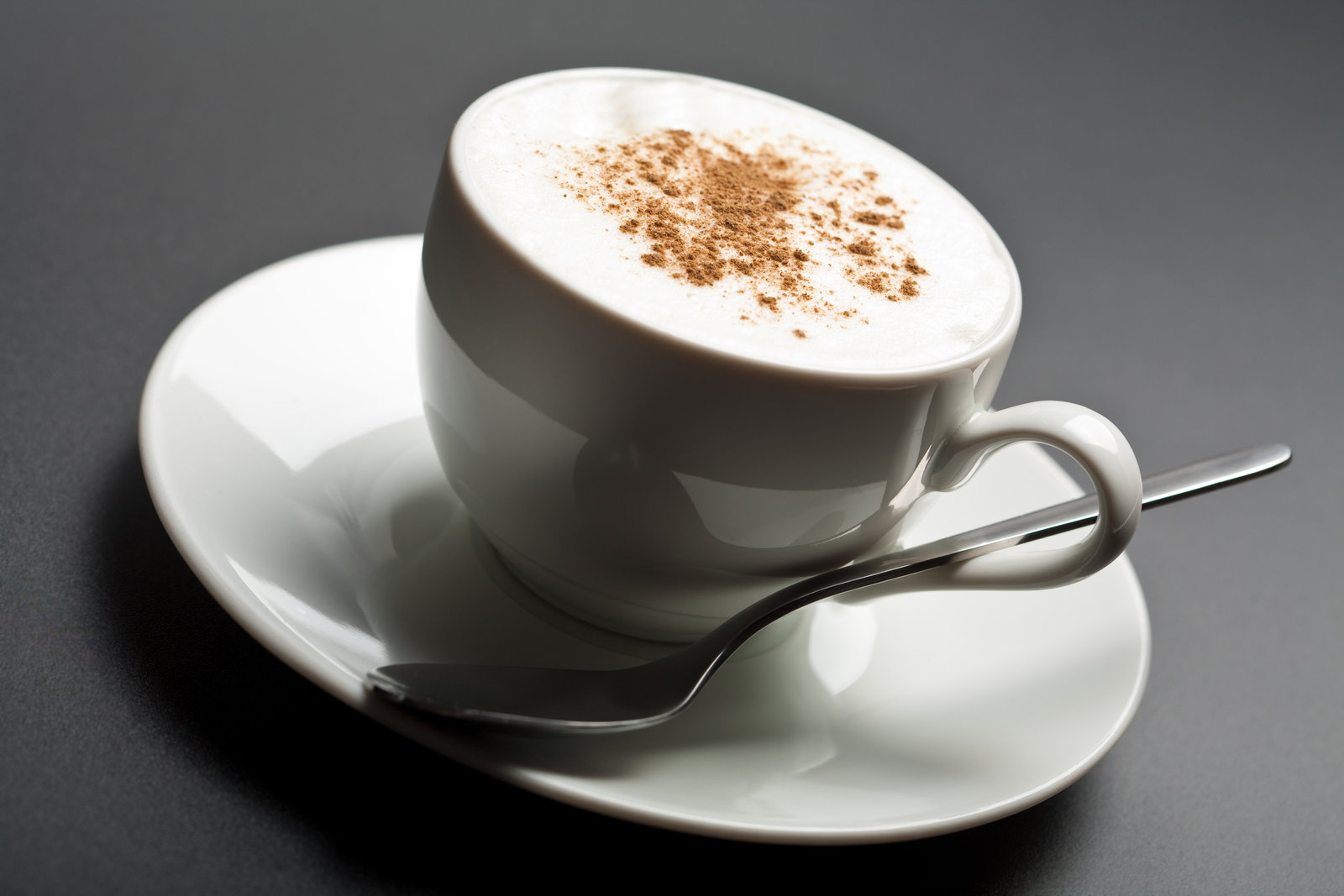
I usually let mine sit for about 15-20 seconds after it’s handed to me, just long enough that the first sip doesn’t scald my mouth, then I go in. By the last mouthful you’re left with a thick disc of foam stuck to the bottom of the cup. Spoon that out, it’s my fav bit and most people just leave it there.
Why Does The Foam Disappear If You Wait?
Because foam is always on its way to collapsing, and the European Space Agency has looked at how, including with a foam experiment on the International Space Station. On Earth, three things drive it:
- Drainage: gravity pulls liquid down out of the bubble walls.
- Coarsening: small bubbles shrink while bigger ones grow at their expense.
- Rupture: the bubbles burst.
Space-agency research isn’t something you expect to stumble into over a cappuccino, but it explains why a cup left on the side ends up as flat, milky coffee. There’s no stopwatch figure I can give you for when that happens, because it depends on the milk and how well it was steamed. Sooner is simply better.
Do You Add Water Or Milk To A Cappuccino?
Milk, never water. The Istituto Espresso Italiano defines its certified cappuccino as 25 milliliters of espresso and 100 milliliters of steamed milk, with no water anywhere in it. The milk is steamed to about 60-65°C (140-149°F), with air worked in as it heats to make the foam.
Whole milk is the traditional choice, and the reason is flavor rather than foam. The protein in milk is what builds the foam, while the fat carries richness and body, so whole milk tastes fuller even though skim foams more easily. Plant milks work too, with some big differences between them, which I’ve compared in the best milk for a cappuccino.
The only cappuccino that involves water is one made from an instant mix, where you add hot water to the powder. If a real cappuccino tastes watery, adding anything won’t fix it: the cause is usually either a weak shot or badly steamed milk, and telling the two apart is the first step.

Should You Add Sugar To A Cappuccino?
Try it plain first. A cappuccino already carries 4 to 5 grams of sugar from the milk, and it reads as creamy rather than sweet, so plenty of people find they don’t miss the spoon. If you still want it sweeter, add it. There’s no rule against it.
Making it at home, stir the sugar into the espresso before the milk goes in. It dissolves faster in the hot shot and you’re not dragging a spoon through the foam afterwards. In a café you don’t get that option, so add it and give one light stir. You’ll lose a little foam, and that’s the fair price of a sweeter cup.
Should You Stir A Cappuccino?
No, apart from the light stir that sugar or a flavor syrup needs to stop it sitting at the bottom. Stirring folds the foam into the coffee, and what’s left drinks much more like a latte.
So I’d leave the spoon on the saucer until the end. Drink it the way it was built, layer by layer, and use the spoon for the one job it’s best at: getting that last bit of foam out of the bottom of the cup.