

(updated August 24th, 2026)
A cappuccino cup holds 5 to 6 ounces, or 150 to 180 ml. That’s the size the specialty-coffee standard specifies, and it’s what the traditional Italian recipe is built for.
If the cappuccino you bought last week came in something twice that size, you weren’t imagining it. Plenty of cups sold for cappuccinos are nowhere near it, and there’s a reason worth knowing.
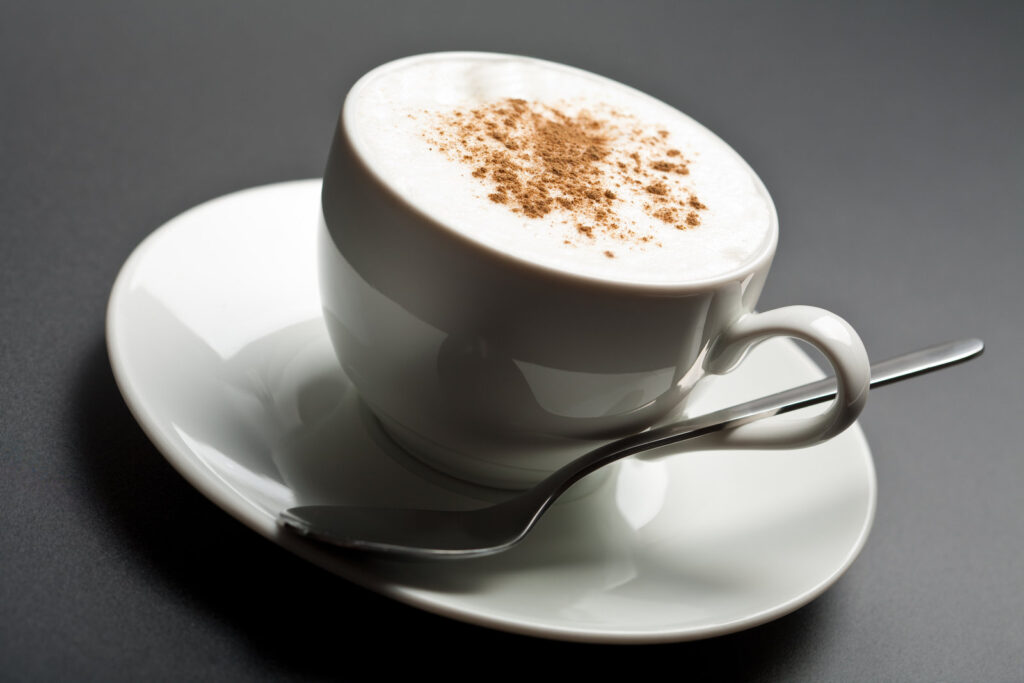
Why Is A Cappuccino Cup Bigger Than The Cappuccino?
Because the foam needs somewhere to go.
The Istituto Espresso Italiano specifies a Certified Italian Cappuccino as 25 ml of espresso and 100 ml of steamed milk. Steaming pushes air into that milk, so the 100 ml leaves the jug at roughly 125 ml. Add the espresso and you’ve got about 150 ml of drink.
Put 150 ml of liquid into a 150 ml cup and it’s level with the rim, which is no use at all: a cappuccino is supposed to arrive with a dome of foam standing proud of the cup. The extra 30 ml at the top isn’t slack. It’s headroom for the foam.
That’s also why the shape matters as much as the volume. The same 150 ml in a wide, shallow cup spreads the foam into a thin layer; in a narrower cup it stacks up. Competition judges measure that depth with a spoon, which tells you how seriously some people take it.
How Many Ounces Is A Cappuccino?
A cappuccino is about 5 ounces of drink, served in a cup that holds 5 to 6 ounces.
Two standards land in the same place, from different directions. Perfect Daily Grind reports that the Specialty Coffee Association defines the cappuccino as a 150 to 180 ml drink, single espresso shot, with at least one centimetre of microfoam. And World Barista Championship judge Craig Dickson, speaking to the Sydney Morning Herald, described the competition cappuccino the same way: “30 millilitres of espresso blended with milk in a 150-millilitre to 180-millilitre cup”, again with at least a centimetre of microfoam.
One caveat on Dickson, because it matters for anyone checking: the championships replaced the cappuccino course with a general milk drink in 2016, so his description records what the competition standard was rather than what judges score today. The measurement has held up regardless, which is why the SCA figure lands on it independently.
Here’s how the common cup sizes compare. Only the first one is a cappuccino cup in the traditional sense; the rest are what the drink gets served in once it leaves that tradition behind.
| Cup size | Volume | What it is |
|---|---|---|
| 5 to 6 oz | 150 to 180 ml | The traditional cappuccino cup, and the competition one |
| 8 oz | 237 ml | Widely sold as a cappuccino cup. Holds noticeably more milk |
| 12 oz | 355 ml | The usual chain medium. Over twice the traditional volume |
| 16 oz | 473 ml | The usual chain large. Over three times it |
Does Cup Size Change How A Cappuccino Tastes?
Yes, but not for the reason you’ll usually see given.
The cup is a container. Pour one shot of espresso and 100 ml of milk into a 6 oz cup or a 12 oz one and the drink is chemically identical in both: same coffee, same milk, same strength. A bigger cup doesn’t dilute anything by itself.
What actually happens is that nobody serves a half-empty cup. Hand a barista a 12 oz cup and they’ll fill it, and since the espresso stays at one or two shots, the extra volume is milk. That’s where the taste goes. The cup didn’t weaken the coffee, it changed the recipe, because the recipe follows the vessel.
Worth being clear about the direction, since plenty of pages get it backwards: a small cup doesn’t make coffee thicker. It just holds less milk.
Are Cappuccino And Latte Cups The Same Size?
Cappuccino and latte cups overlap more than you’d think, and the reliable difference between the two drinks isn’t the cup at all. It’s the foam.
Melissa Caia, who runs the William Angliss Institute’s Coffee Academy, puts the teaching standard plainly in the same Sydney Morning Herald piece: “We say two centimetres for a cappuccino, one centimetre for a caffe latte, and minimal foam on a flat white.” Competition rules set a floor rather than a target, at least one centimetre.
So the two figures aren’t in conflict. One is a minimum a drink has to clear, the other is what a training academy aims for. Either way the cappuccino carries more foam than the latte, and that’s the thing to look for. A latte does tend to come in a larger cup, and often a glass, but plenty of cafés serve both in whatever’s on the shelf.
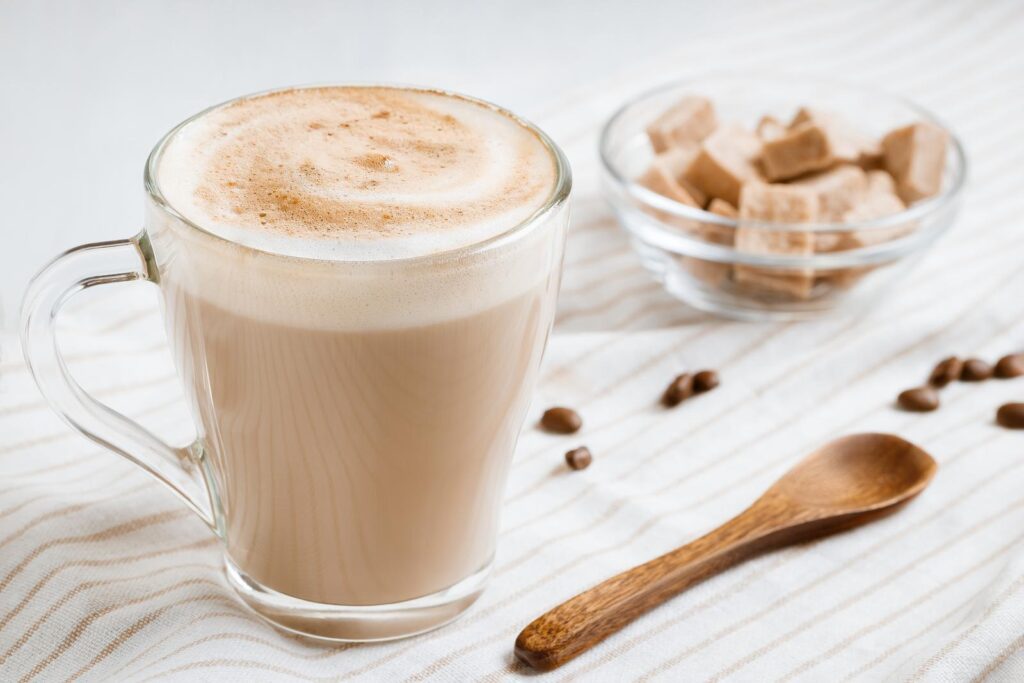
Why Are Café Cappuccinos So Much Bigger?
Because the cup sizes came from somewhere else.
Chain menus run on a small, medium, large ladder, and the cappuccino gets fitted to whichever cup the size name points at. A 12 oz “medium” is 355 ml, more than twice the Italian spec, so the drink is built to fill the cup rather than the cup chosen to fit the drink. What’s inside is a perfectly nice milky coffee. It just isn’t measuring itself against the same thing.
This is why the same drink seems to change size depending on where you order it, and it’s the same reason the millilitre figure for a cappuccino varies so much between sources. They’re often describing different cups.
Which Size Should You Use At Home?
Six ounces. If you’re buying one cup and you want it to make a proper cappuccino, 6 oz (177 ml) sits at the top of the traditional range and gives you the foam headroom without leaving the cup looking half-empty.
I’d take that over an 8 oz cup even though 8 is the more common size, and the reason is simple: an 8 oz cup quietly turns your cappuccino into a small latte every time you fill it. You won’t notice you’re doing it. The cup decides, and then you drink what the cup decided.
Wide and shallow beats tall and narrow, too, but that one’s genuinely a preference rather than a rule.