
(updated September 4th, 2026)
A traditional Italian cappuccino has no cinnamon on it. The dusting you get in Italy and across most of Europe is cocoa, and cinnamon is chiefly an American habit, common enough in US coffee shops that plenty of people assume it belongs on the drink.
None of which makes it wrong. It just means cinnamon’s something you add, not something a cappuccino comes with.
Why Is It Cocoa In Italy And Cinnamon In America?
What Goes Into A Classic Cappuccino
Three things: espresso, steamed milk, and the foam that comes off the top of that milk. No spices, no flavorings, nothing dusted on it as standard.
You will often see the drink described as equal parts of those three, the so-called rule of thirds. It doesn’t hold up, and the Italian specification is nowhere near it, so it is worth reading what the ratio actually is before you take that number anywhere. The relevant part here is simply that a classic cappuccino is coffee, milk and foam, and that’s where the list stops.
Italian coffee culture leans on the taste of the espresso itself. Anything dusted over the top competes with it, which is most of the reason the tradition never picked it up.
Italy is unusual in having a body that certifies the drink, and its description is a useful check here: the Istituto Espresso Italiano specifies a Certified Italian Cappuccino as espresso and steamed milk, and describes the finished cup as white with a brown rim, with decorated versions running from brown to hazelnut.
Read that carefully and it explains the split. Cocoa fits a description that already runs to brown and hazelnut, which is why a cocoa dusting sits comfortably inside the tradition even though the specification itself lists only two ingredients. Cinnamon has no such foothold. It isn’t excluded by any rule, it simply never belonged to the Italian version of the drink in the first place.
How Cocoa And Cinnamon Became Toppings
Both are late additions, and they spread in different places. Cocoa powder took hold as a finishing touch in Europe and Australia. Cinnamon took off in American coffee shops, and the big US chains carried it outward as coffee culture went global.
People add them for the look as much as the taste. A dusting gives the foam something to be, and it puts a bit of aroma right under your nose as you lift the cup. Plenty of shops now add one by default unless you say otherwise.
Where You Get Cinnamon And Where You Get Cocoa
It’s close to a regional map, and knowing it saves a certain amount of confusion when the cup in front of you doesn’t look like the one you expected:
- Italy: espresso, steamed milk and foam, and usually nothing on top. More on how a cappuccino is made in Italy.
- Europe and Australia: cocoa powder, often without being asked for.
- United States: cinnamon, either dusted on or offered at the counter.
What Does Cinnamon Do To A Cappuccino?
Mostly it works on the aroma, and the aroma then does a lot of the work on the taste. Cinnamon carries almost no sugar, so it isn’t sweetening anything, but a drink that smells sweet and warm tends to read as sweeter than the same drink without it.
That’s worth knowing if you’re using it to cut down on sugar, because it’s a real effect and it isn’t the same as adding sweetness. If the coffee underneath is harsh, cinnamon covers the edge of it rather than fixing it.
When Cinnamon Is Added
Where it goes in changes how strong and how even the flavor is:
| Method | When added | Flavor result |
|---|---|---|
| Powder dusting | After the foam is poured | Light, sits on the surface |
| Mixed into the milk | During steaming | Deeper, spread through the drink |
| Syrup | Before the milk goes in | Sweet and uniform |
| Ground with the coffee | With the espresso grounds | Strongest, tastes built in |
Most coffee shops take the first route and sprinkle it over the finished drink, which is why the smell hits you before the first sip. Stirring it into the milk while steaming spreads it further but costs you that.
How To Make A Cinnamon Cappuccino At Home
You need espresso, milk you can foam, and either ground cinnamon or a cinnamon syrup. The only real difficulty is keeping the spice from burying the coffee.
What You Need
- One shot of espresso, or about half a cup of strong brewed coffee.
- Around half a cup of milk. Whole milk is the standard choice for a cappuccino and it is what I would use, though it’s worth knowing the foam is built by the protein in milk rather than the fat, so lower-fat milk foams perfectly well. Whole milk’s there for the flavor and the body it gives.
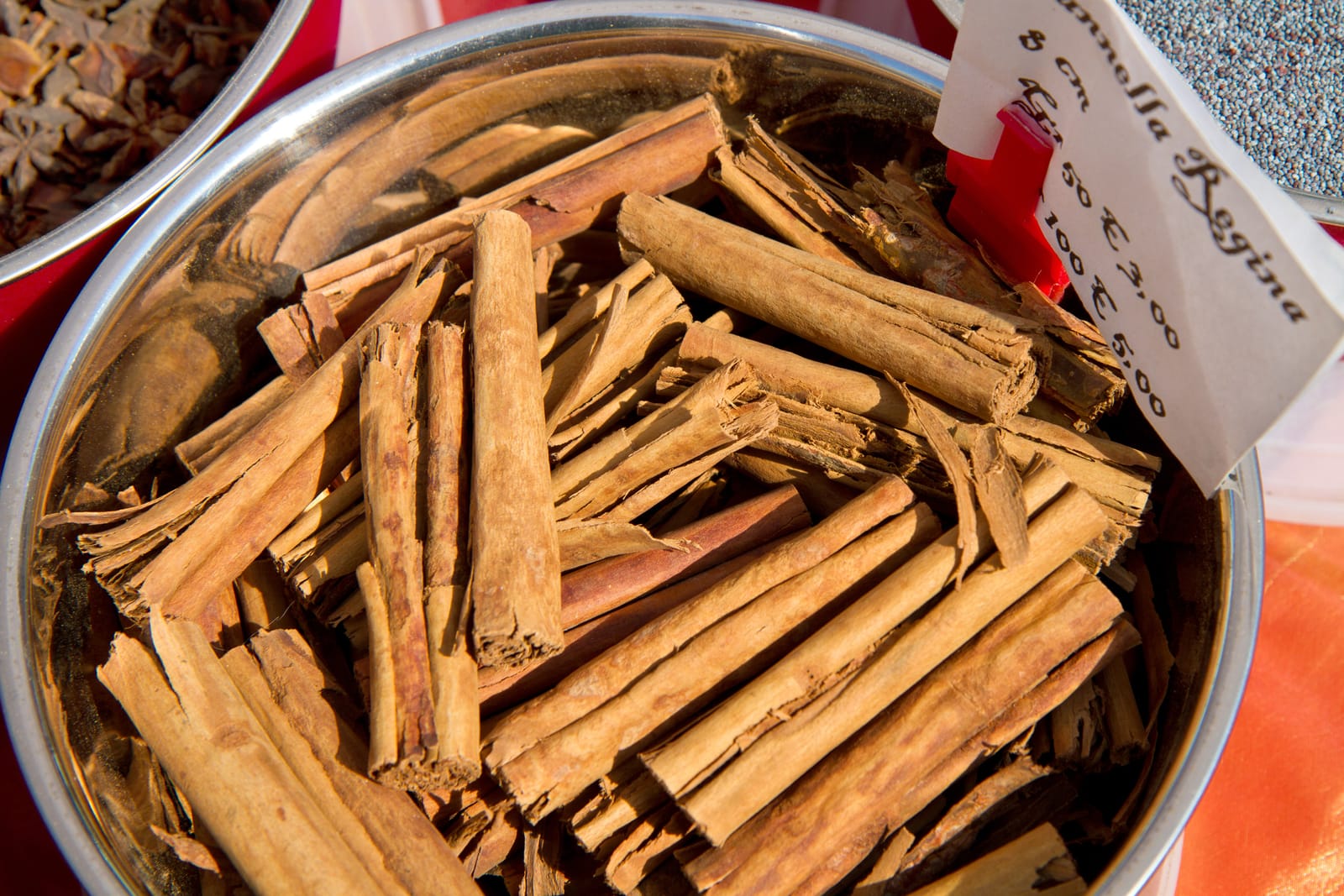
- Ground cinnamon for dusting, or a stick if you’re making syrup.
- Optional: vanilla, sugar or honey, if you want it sweeter than the cinnamon makes it seem.
Start with cold milk. It takes air on properly while it’s cold, and starting warm costs you the window, which is covered in more detail in how long to steam milk for a cappuccino.
Making Cinnamon Syrup
- Combine a quarter cup of water with a quarter cup of sugar in a small pan, and add one cinnamon stick or a teaspoon of ground cinnamon.
- Heat over medium heat, stirring until the sugar has dissolved and it comes to a boil.
- Turn it down and simmer for five to ten minutes, until it thickens slightly and the smell strengthens.
- Cool for about ten minutes, then strain the stick out if you used one.
- Keep it in the fridge for up to two weeks, and use one or two tablespoons per cup.
What Cinnamon Cappuccino Variations Are Worth Trying?
The two you’ll meet most are the iced version and the flavor pairings, and they behave quite differently.
Iced Cinnamon Cappuccino
Cold espresso, cold milk foamed cold, ice, and cinnamon over the top. You can foam cold milk by shaking it hard in a jar or running a frother through it, and it gives you a lighter foam that sits on the surface rather than the dense cap you get from steaming.
Some shops finish it with whipped cream instead of foam. That’s a different drink, and worth ordering knowingly rather than by accident.
Cinnamon Flavor Pairings
- Cinnamon and vanilla: the mildest of them, and the one that’s least likely to bury the coffee.
- Cinnamon and chocolate: cocoa powder or chocolate syrup, which brings you back toward the European dusting with a spice edge.
- Cinnamon and caramel: sweetest of the three, and the easiest to overdo.
- Cinnamon and nutmeg: a pinch of nutmeg alongside, which reads as more wintery than either alone.
Around the holidays these get combined with pumpkin spice or gingerbread, usually under whipped cream. A cinnamon roll cappuccino is the same idea with brown sugar syrup doing the pastry impression.
Should You Put Cinnamon On A Cappuccino?
If you like it, yes, and the tradition argument isn’t much of an argument once you’re making the drink at home anyway.
I’d dust it on top rather than steam it into the milk, and I’d use less than feels right. On top, it hits the aroma first and leaves the coffee underneath intact, and you can always add more. Stirred through, it’s in there for good, and a cappuccino’s a small drink for a spice that assertive.