
(updated August 25th, 2026)
Yes. A cappuccino is espresso and milk, and neither contains gluten, so the drink itself is not the thing to worry about. What’s worth checking is everything else that might have gone into the cup.
That’s the useful version of this question. Not “is a cappuccino safe”, but “what got added to this one”.
What Is Actually In A Cappuccino?
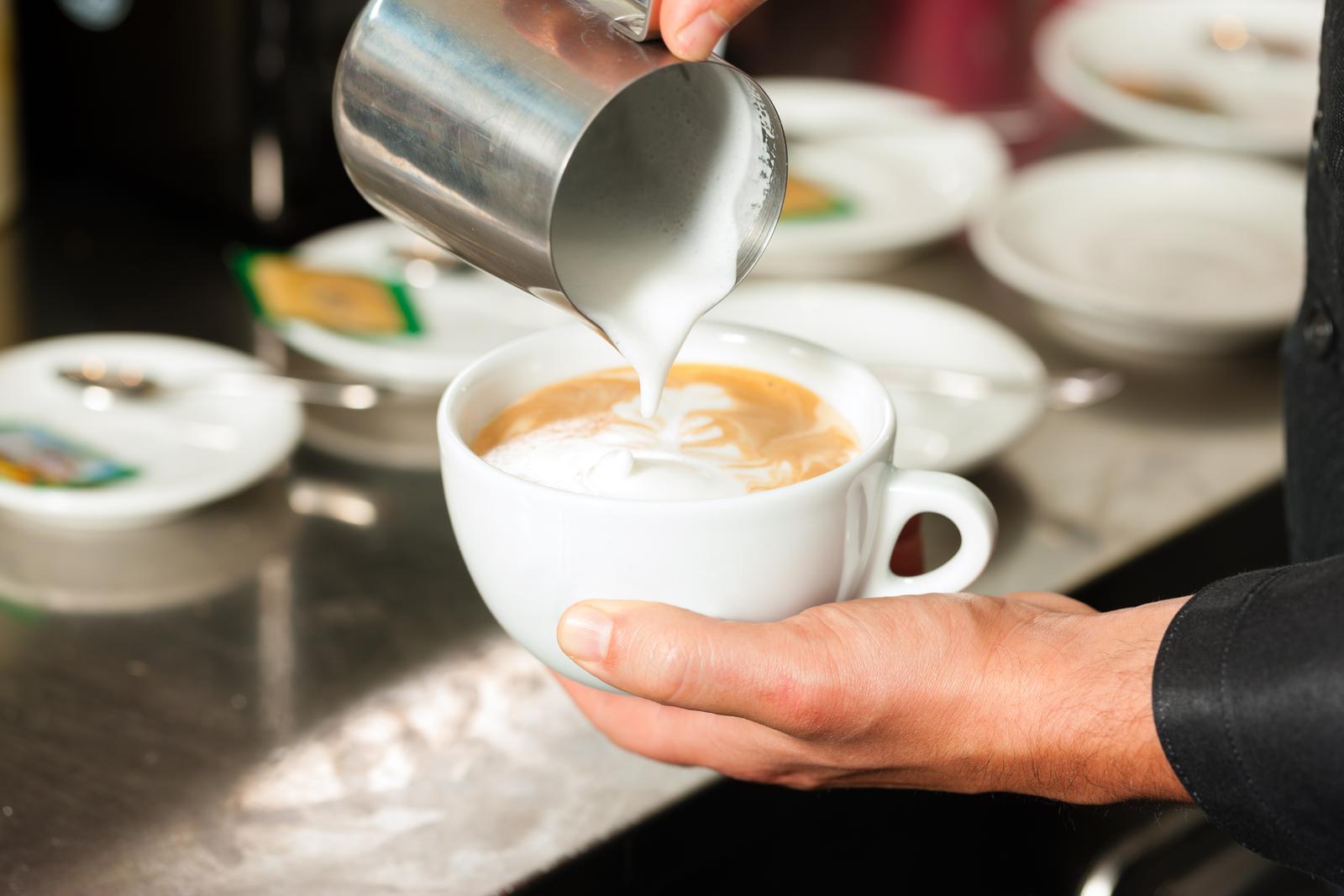
Two things you pour. About 25 ml of espresso and 100 ml of milk, with the foam being that same milk after air has been worked into it. Coffee beans are a fruit seed and milk comes from a cow, and neither is a cereal, so a plain cappuccino made from those two things has nothing in it to declare.
So the answer to the question as asked is a straightforward yes. Everything below is about the versions that aren’t just espresso and milk.
Where Could Gluten Get Into A Cappuccino?
Four realistic routes, and none of them is the coffee or the milk:
- Flavoured syrups and powders. Malt and barley derivatives turn up in flavourings, a syrup is not something you can eyeball, and in the US neither has to be flagged as an allergen.
- Toppings. Anything dusted, crumbled or sprinkled on top is a separate product with its own ingredient list.
- Instant sachets and vending mixes. These are formulated products rather than coffee and milk, so they are worth reading properly.
- Shared equipment in a cafe. The same scoops, jugs and surfaces handle pastries and flavour powders all day.
The first three you can check on a label. The last one you have to ask about.
Are Instant Cappuccino Sachets Gluten Free?
Usually you can tell from the packet, but how much the packet tells you depends on where you bought it, and that catches people out.
In the UK and EU, Coeliac UK explains that cereals containing gluten are among the 14 allergens that must be emphasised in the ingredients list, in bold, naming the specific cereal, “even if only a tiny amount is used”. Scanning for bold works there.
In the United States it does not, and this is the part worth carrying away. Only wheat is a major allergen, so the Celiac Disease Foundation warns that “a lack of allergen labeling does NOT mean that the product is gluten-free. Barley and rye are not in the top eight allergens required to be listed.” An allergen box on a US packet legally cannot warn you about barley or malt, which are the likeliest sources here, so the ingredients list has to be read in full.
There is also a rule that runs the other way, and it defuses the ingredient that worries people most. The ingredient list on a Nescafe sachet starts with glucose syrup, which is the largest single thing in it, and glucose syrup is often made from wheat. That sounds alarming and it isn’t: Coeliac UK lists “glucose syrup derived from wheat or barley (including dextrose)” and wheat-based maltodextrins as safe for people with coeliac disease, because the gluten is removed during processing. That’s why it doesn’t have to be declared as a cereal.
So the scariest-looking word on the packet is not the one that matters. The words that do are wheat, barley, rye, malt and oats, wherever they appear in the list. A “may contain” warning is voluntary, and when a manufacturer uses one they have decided there is a real cross-contamination risk.
Is Gluten Free The Same As Dairy Free?
No, and they get tangled together constantly, including on the older version of this page. They are two unrelated things. Gluten is a protein in wheat, barley and rye. Lactose is a sugar in milk. Avoiding one has nothing to do with avoiding the other.
Which means ordinary dairy milk is already gluten free, and there’s no such thing as “gluten free milk” as a category to go looking for. If you’re switching to a plant milk, you’re solving a lactose problem, not a gluten one.
Does Oat Milk Change The Answer?
It is the one swap that can. Both charities put oats on the list to check, the Celiac Disease Foundation adding “unless specifically labeled gluten-free”, and Coeliac UK’s position is that most people with coeliac disease tolerate gluten free oats without trouble, but that standard oats are often produced alongside wheat, barley and rye and get contaminated. A very small number of people react to gluten free oats anyway.
The trap is in the wording on the carton. Coeliac UK is blunt about it: “100% oats”, “pure oats” and “organic” do not tell you whether the product is gluten free. Only oats testing at 20 parts per million or less can carry a gluten free label, so that label is the thing to look for.
Worth sitting with, because it runs against the instinct: someone who moves off dairy to solve one problem can pick up a question they never had with cow’s milk.
What Should You Check When You Order One?
Order it plain and you’ve removed most of the problem, because espresso and milk are the parts with nothing in them. The additions are where the checking belongs: skip the syrup and the dusting, or ask what’s in them.
For anything packaged, read the ingredients rather than the front of the box, and look for the emphasised cereal names. On oat milk, look for the gluten free label specifically rather than “pure” or “100%”.
And if you’re coeliac rather than avoiding gluten by preference, the cross-contamination question in a busy cafe is a conversation with the barista, not something a page can answer for you.